Sword in the Stone
Posted in: Architectural Gems Churches & Religious Buildings Legends Localities Museums & Galleries Siena Tourist Attractions
There are plenty of things to see and do in Tuscany – in fact, there is no shortage at all and a list that one could not complete in even several lifetimes – but alongside the famous churches, galleries, works of art, palaces, museums and other commonplace and famous attractions, there are some more unique and strange sights. Once you have found a luxury villa in Tuscany and are planning a trip, consider these attractions alongside the prerequisite visits to the Uffizi, Leaning Tower of Pisa and Palazzo Vecchio.

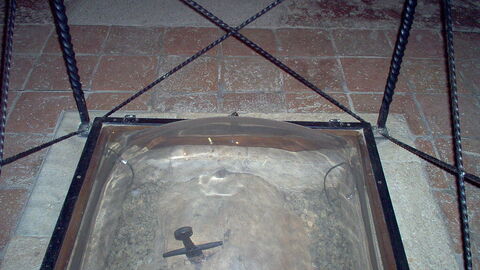
6. The Sword in The Stone, San Galgano Abbey

Galgano Guidotti was born in 1148 to a minor noble and was a self-centred, violent knight until he was visited by the Archangel Michael in a vision and told to renounce his ways when he was 32.
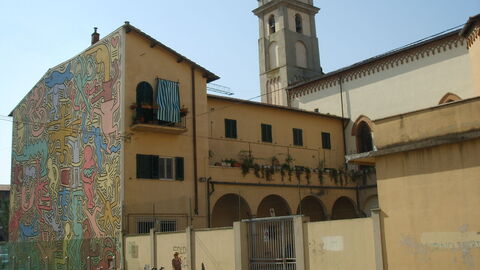
Haring's Tuttomondo on the side of S. Antonio in Pisa
Posted in: Churches & Religious Buildings Florence Localities Museums & Galleries Pisa Tourist Attractions
Continuing on from our previous post, here are some more bizarre and wonderful attractions in Tuscany that are absolute must-sees. Once you have found your perfect luxury villa in Tuscany and are looking to explore the region, be sure to look past the obvious and find the weird and fascinating that is hiding in plain sight.

4. Tuttomondo by Keith Haring, Pisa

Art and Italy are somewhat synonymous and there is no shortage of artworks to be found in Tuscany, in particular. However, most of these are housed in galleries, inside churches and palaces and in typical enclosed or public spaces. Keith Haring's “Tuttomondo” mural, meanwhile, is located out in the open, on the side of a church in Pisa.
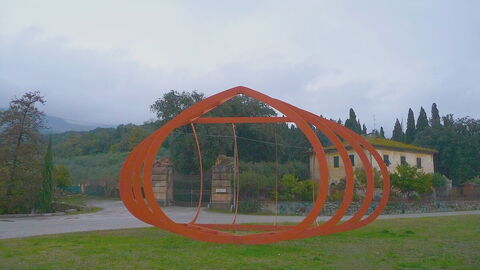
Grande Ferro Celle
Posted in: Architectural Gems Countryside Localities Museums & Galleries Must See Attractions Parks & Gardens Tourist Attractions
The Fattoria di Celle, or Celle Farm, located just 5km from Pistoia is a stunning attraction and fascinating place. While the property has roots to a building from as far back as 1000 AD, the house was built in the 17th century and present form of the gardens is owed to 19th century reconstructions and were further enhanced in the 1980s. It is this enriching of the gardens, with a sculpture park, that draws crowds of art-lovers, schools and more adventurous tourists to this place each year.

The sculpture park showcases 70 site-specific installations sprinkled across the vast family estate and was created by local businessman Giuliano Gori over three decades ago, yet still displays cutting-edge art installations by the world's top contemporary artists. Selected international artists have been to be invited to create installations in the remarkable outdoor spaces of the Romantic park and farmland as well as inside the historic villa and various farm buildings.
Vespa
Posted in: Curiosities History Localities Museums & Galleries Pisa Tourist Attractions
People zipping around town on Vespas, immaculately dressed, past historic buildings and pretty piazzas, on the way to meet friends for coffee. It is one of those idealised images of Italy that many of us have and there is no doubt that, no matter how accurate a picture this may or may not be, Vespa is one of the most iconic products to come out of the country. It is intrinsically Italian. If you are a bit of a Vespa fanatic, there is surely one Italian destination that will have decided itself: Pontedera in the Province of Pisa, where you'll find the Piaggio Museum. Piaggio is the fourth largest producer of scooters and motorcycles in the world but it was the world renown of the Vespa that put the company on the international map.
The Birth of Venus
Posted in: Florence History Localities Museums & Galleries Renaissance Tourist Attractions
If you have found a luxury villa in Florence and are planning to take in the art and culture for which the city is so famous, you have, no doubt, pencilled in a visit to the Uffizi Gallery. The Uffizi Gallery, or Galleria degli Uffizi, in Piazza della Signoria is one of the oldest and most famous art museums in Europe and the world and was originally begun under Vasari for Cosimo I de' Medici in 1560. The name comes from the Italian word for “offices” which is what the building was intended to house when it was first constructed.