There are plenty of things to see and do in Tuscany – in fact, there is no shortage at all and a list that one could not complete in even several lifetimes – but alongside the famous churches, galleries, works of art, palaces, museums and other commonplace and famous attractions, there are some more unique and strange sights. Once you have found a luxury villa in Tuscany and are planning a trip, consider these attractions alongside the prerequisite visits to the Uffizi, Leaning Tower of Pisa and Palazzo Vecchio.
6. The Sword in The Stone, San Galgano Abbey
Galgano Guidotti was born in 1148 to a minor noble and was a self-centred, violent knight until he was visited by the Archangel Michael in a vision and told to renounce his ways when he was 32.
6. The Sword in The Stone, San Galgano Abbey
Galgano Guidotti was born in 1148 to a minor noble and was a self-centred, violent knight until he was visited by the Archangel Michael in a vision and told to renounce his ways when he was 32.
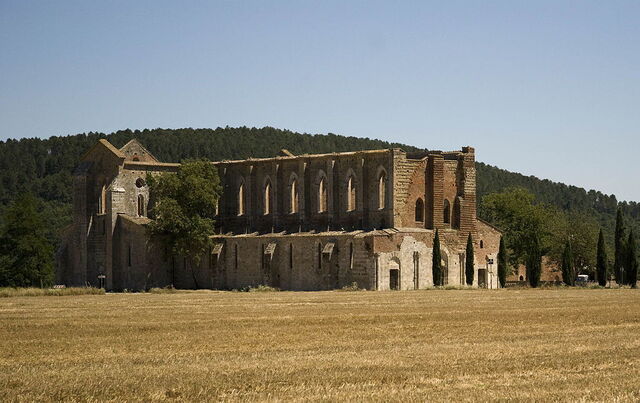
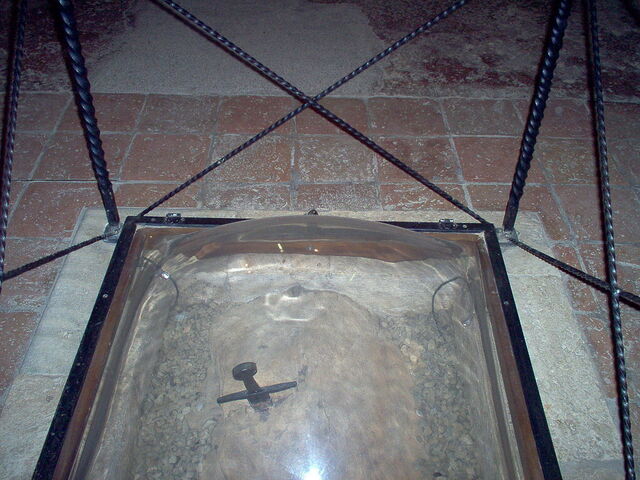
He then became a hermit and took up residence in a nearby cave. While on his horse one day, he was mystically led to Montesiepi, a hill near his home town and saw a vision of the Apostles, Christ and Mary. They, once again, told him to turn his back on his former ways. In one version of the tale, he replied that it is easier said than done and about as easy as splitting a rock with a stone. To make his point, he thrust his sword into the rocky ground at his feet and found it sank almost to the hilt with ease. In another version, he merely marked the spot he was shown with his sword as a makeshift cross. Either way, a sword remains on that spot, embedded deep into the ground to this day.
For many years, the sword was considered a fake but carbon dating and stylistic analysis have proven that it does come from the correct period in history; though we cannot prove how exactly it got in the stone and who put it there.
For many years, the sword was considered a fake but carbon dating and stylistic analysis have proven that it does come from the correct period in history; though we cannot prove how exactly it got in the stone and who put it there.
Today, the sword is kept under a glass case to prevent attempts to free it from the stone that resulted in damage in the past. You won't be able to free it and prove that you're the rightful heir to the throne of England but, if you are visiting the Siena area, you should still stop by!
7. Catherine of Siena's Mummified Head
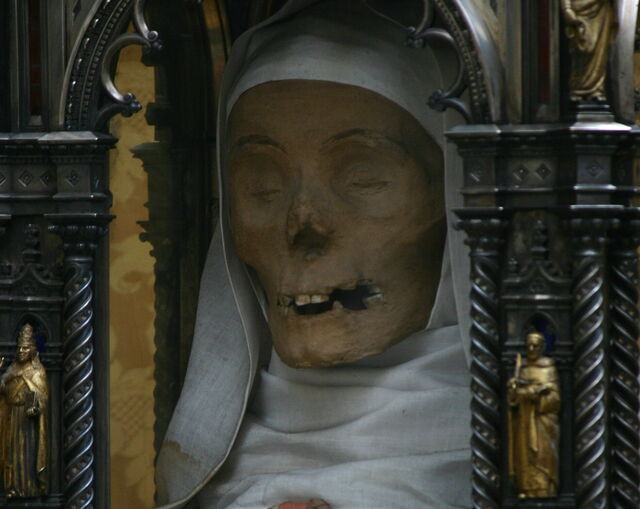
Catherine of Siena was a Dominican tertiary, philosopher and theologian. Born in the 14th century, she began having visions of Christ at the age of five or six. At seven, she had decided to devote her life to God. She then resisted marriage until her family eventually allowed her to join the Dominican Order. She then became known for helping the sick and poor and launching reform campaigns among the faithful. Her writings spread her word further and gained more followers but she also became known for extreme devotion, eventually dying due to her refusal to eat. In 1461, she was canonised by Pius II and is now one of the two patron saints of Italy. Siena, her birthplace, still remains the best place to see evidences of her life and works. The most intriguing of these is her head, which was separated from her body after her death in Rome when followers wished to return her to Siena. Unable to sneak her full body past guards in Rome, they settled for just her head and smuggled it out of the city. It is set in an ornate reliquary in the Basilica San Domenico in Siena. Strange and a little macabre to most visitors, this unique relic is one of the most intriguing things in the city.
Be sure to read on to our final post for a few more unique attractions to take note of for your next trip to Tuscany.
7. Catherine of Siena's Mummified Head
Catherine of Siena was a Dominican tertiary, philosopher and theologian. Born in the 14th century, she began having visions of Christ at the age of five or six. At seven, she had decided to devote her life to God. She then resisted marriage until her family eventually allowed her to join the Dominican Order. She then became known for helping the sick and poor and launching reform campaigns among the faithful. Her writings spread her word further and gained more followers but she also became known for extreme devotion, eventually dying due to her refusal to eat. In 1461, she was canonised by Pius II and is now one of the two patron saints of Italy. Siena, her birthplace, still remains the best place to see evidences of her life and works. The most intriguing of these is her head, which was separated from her body after her death in Rome when followers wished to return her to Siena. Unable to sneak her full body past guards in Rome, they settled for just her head and smuggled it out of the city. It is set in an ornate reliquary in the Basilica San Domenico in Siena. Strange and a little macabre to most visitors, this unique relic is one of the most intriguing things in the city.
Be sure to read on to our final post for a few more unique attractions to take note of for your next trip to Tuscany.
Photo credit
Picture 1: Alexmar983 / CC BY-SA 3.0;
Picture 2: Sailko / CC BY-SA 3.0;
Picture 3: Cerrigno / CC BY-SA 3.0
Picture 1: Alexmar983 / CC BY-SA 3.0;
Picture 2: Sailko / CC BY-SA 3.0;
Picture 3: Cerrigno / CC BY-SA 3.0