As you explore the beautiful landscape of the Chianti region of Tuscany, you are likely to stumble upon all sorts of surprises and incredible hidden gems from pretty old towns that are centuries old to amazing views that look like a postcard come to life to tiny little vineyards producing amazing wines. It is why you should always keep your eyes open and be prepared as you travel around: you never know what you might find!
One such incredible gem that you might discover while exploring Chianti is the Parco Sculture del Chianti, or Chianti Sculpture Park. Located well off the regular beaten path for tourists, in the middle of an oak wood between Pievasciata and Vagliagli, around 10km north of Siena, the park was created by Piero and Rosalba Giadrossi on 7 hectares of wood and opened to the public in 2004 as a parkland and outdoor gallery space that follows the ancient Italian tradition of creating site-specific outdoor artworks.
12
Mar
2020
2020
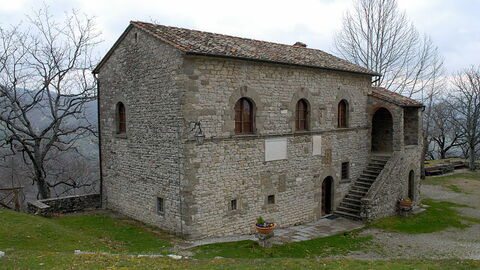
Not far from Arezzo are two towns made famous by their most well-known sons, Anghiari and Caprese Michelangelo, where Da Vinci and Michelangelo, respectively, were born. In both of these places you will find museums dedicated to these two great pillars of the Italian Renaissance and they are must-sees for art-lovers who are travelling in Tuscany and want to delve further into the lives and works of two of the most important figures in the history of European art. The Michelangiolesco Museum is an easy outing for those who have found a vacation rental in Arezzo, located within the province of Arezzo and a short distance from the city of Arezzo in Caprese Michelangelo.
While the museum was opened in 1964, to mark the 400th anniversary of the death of Michelangelo, it can actually trace its origins all the way back to 1875. The Michelangiolesco Museum is housed inside the Caprese Michelangelo fortress complex, which is made up of three main buildings, the Palazzo del Podestà, Palazzo Clusini and the Corte Alta, as well as a garden that is open to the outdoors. Caprese came under the rule of Florence after the town submitted to the Florentine Republic in 1384 and from that point onwards Florentine podestàs, local magistrates, took turns residing in the town on an annual basis. It is in the residence of these local rulers, the Palazzo del Podestà, that Michelangelo was born on the 6th of March 1475 to Ludovico di Leonardo Buonarroti Simoni, who was the reigning podestà, in the area at the time.
Tuscany is a place full of sleepy and pretty little towns that one could easily pass by without a second glance but which contain rich histories and unexpected surprises. Look more closely and you will be astounded by what you might see if you have found a vacation rental in Tuscany and are exploring the region. One such town, that you could easily miss and think nothing more of, is Pieve Santo Stefano, which is located between Florence and Arezzo and has a population of just over 3,000 people. Pretty and very typically Tuscan in appearance, you would think nothing unusual of it at first glance. However, there is much more to this fascinating town than first meets the eye. Back on August 5th, 1944, a year after Mussolini fell from power and the Nazis took control of Italy, the townspeople of Pieve Santo Stefano were abruptly awoken and marched north on pains of death with whatever they could bring with them while the town was completely destroyed. Bar a church in the centre of town, the rest was rubble. It was rebuilt but, if you look closely, you will see concrete in place of cobblestones and Renaissance gems replaced by modern facades.
Then came Saverio Tutino, a former member of the Italian Resistance and journalist who had explored the globe and found himself in town for an art exhibition in 1984. He had had the idea of instituting a place to house and elevate the stories of normal Italians, something he felt was lacking in the country’s rich story-telling heritage, and thought Pieve Santo Stefano, this town haunted so heavily by the past, a perfect place for a, “House of Memory.” And, so, the town became famous for a different reason as home to the Archivio Diaristico Nazionale, the National Diary Archive, and came to be known as the Città del Diario, the City of Diaries.
27
Feb
2020
2020
Posted in: Architectural Gems
Curiosities
History
Museums & Galleries
Roman Empire
Tourist Attractions
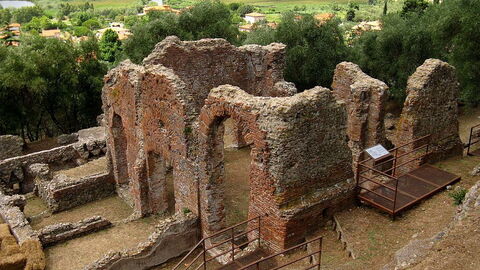
The walled city of Lucca is a stunning medieval gem that is full of incredible buildings, palaces, churches, pretty, little side streets and winding alleys, works of art, cultural hotspots, and historic beauties. If you find a vacation rental in the Province of Lucca or a holiday rental in Lucca, you will quickly realise that just wandering the streets of this charming city, so steeped in history, is a delight in its own right and utterly transports you back in time. However, it is not just the city that is rich in history and culture, the wider province around Lucca is full of little gems and fascinating surprises. One such gem is Massaciuccoli Romana, an archaeological complex that is home to a wide variety of ruins and remains from the time of the Romans including villas, baths, and more.
Located in the municipality of Massarosa, on the banks of Lake Massaciuccoli, the first indications of the Massaciuccoli Romana complex were first discovered back in 1756 though there wasn’t much public interest or involvement from the larger academic world until the 19th, and then the 20th, century. A Roman lead pipe inscription (a Latin inscription that is found on leaden Roman water pipes and which provides information on its manufacturer, owner, and often the reigning emperor) was found in 1770 and then the western sector of another group of structures was discovered in the 1930s, which included a balneum (a thermal plant built for private, rather than public, use) and mosaics, that were deemed to be part of a villa. In the 2000s the work at Massaciuccoli Romana was officially taken up and continued under the authority of the Municipality of Massarosa. The Municipality also opened the site as a tourist attraction and museum in this time period and continue to promote education, research, and excavation on the site to this day.
27
Jan
2020
2020
Posted in: Architectural Gems
Curiosities
Florence
Localities
Museums & Galleries
Must See Attractions
Tourist Attractions
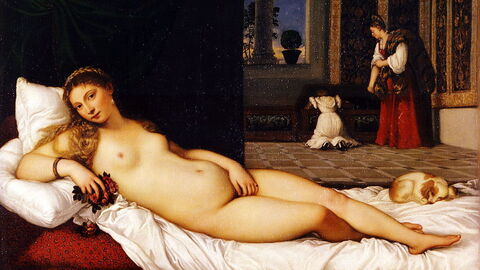
Florence is famously the birthplace of the Renaissance and one of the most important hubs of art and culture in Europe to this day. As such, it is an ideal holiday destination for those who are interested in architecture, sculpture, painting, music, theatrical productions, garden design, fashion, and much more besides. If you want to fill a vacation with beautiful treats for all of the senses and some of the greatest artistic works that man has ever produced, then a luxury villa in Florence and a city break in the artistic capital is a must.
Upon arrival, you will quickly find that there is no shortage of incredible museums, galleries, villas, churches, and more stuffed with wonderful works of art to be admired. However, among the more famous names of the likes of the Uffizi and the Duomo, we also recommend a visit to the equally wonderful Museo Nazionale del Bargello, or the Bargello Museum.