Florence is famously the birthplace of the Renaissance and one of the most important hubs of art and culture in Europe to this day. As such, it is an ideal holiday destination for those who are interested in architecture, sculpture, painting, music, theatrical productions, garden design, fashion, and much more besides. If you want to fill a vacation with beautiful treats for all of the senses and some of the greatest artistic works that man has ever produced, then a luxury villa in Florence and a city break in the artistic capital is a must.
Upon arrival, you will quickly find that there is no shortage of incredible museums, galleries, villas, churches, and more stuffed with wonderful works of art to be admired. However, among the more famous names of the likes of the Uffizi and the Duomo, we also recommend a visit to the equally wonderful Museo Nazionale del Bargello, or the Bargello Museum.
Upon arrival, you will quickly find that there is no shortage of incredible museums, galleries, villas, churches, and more stuffed with wonderful works of art to be admired. However, among the more famous names of the likes of the Uffizi and the Duomo, we also recommend a visit to the equally wonderful Museo Nazionale del Bargello, or the Bargello Museum.
Located in the imposing Palazzo del Bargello (or Palazzo del Popolo), a fortified urban palace that is more like a fortress with its battlements and austere façade and which was begun in 1255, the museum is home to an impressive collection of works of art and historic objects. The palazzo is one of the oldest buildings in the city and was originally the headquarters of the Capitano del Popolo (Captain of the People), then later became the home of the Podestà and Council of Justice, then became the living quarters for the Captain of Justice (The Chief of Police), then was used as a prison, until, eventually, it became a museum in the 19th century. The word, “bargello,” itself is thought to come from the late Latin word, “bargillus,” which can trace its roots to the Gothic, “bargi,” and the German, “burg,”, meaning a castle or fortified tower and obviously refers to the rather unique and distinct design of the building.
Established as a museum after the Holy Roman Emperor Peter Leopold was exiled and a temporary Governor of Tuscany decided that the Bargello should no longer be a jail, the museum was opened to the public in 1865, boasting the largest Italian collection of Gothic and Renaissance sculptures. Dating from the 14th to the 17th centuries, the collection largely came from the Grand Ducal collections. Among the collections are works by some of the most famous artists from throughout history including the likes of Michelangelo, Donatello, Cellini, Giambologna, and others. In addition to the great sculptural works that make up the majority of the museum’s collections, you can also find stunning examples of decorative or “minor” arts from the Carrand, Ressman, and Franchetti collections that are dotted throughout the rooms of the palace including Roman and Byzantine ivories, Limoges porcelain, German and French gold, Renaissance jewels, Islamic bronze objects, Venetian glass, panel pieces, wooden sculptures, majolicas, medals, coats of arms, and more.
Established as a museum after the Holy Roman Emperor Peter Leopold was exiled and a temporary Governor of Tuscany decided that the Bargello should no longer be a jail, the museum was opened to the public in 1865, boasting the largest Italian collection of Gothic and Renaissance sculptures. Dating from the 14th to the 17th centuries, the collection largely came from the Grand Ducal collections. Among the collections are works by some of the most famous artists from throughout history including the likes of Michelangelo, Donatello, Cellini, Giambologna, and others. In addition to the great sculptural works that make up the majority of the museum’s collections, you can also find stunning examples of decorative or “minor” arts from the Carrand, Ressman, and Franchetti collections that are dotted throughout the rooms of the palace including Roman and Byzantine ivories, Limoges porcelain, German and French gold, Renaissance jewels, Islamic bronze objects, Venetian glass, panel pieces, wooden sculptures, majolicas, medals, coats of arms, and more.
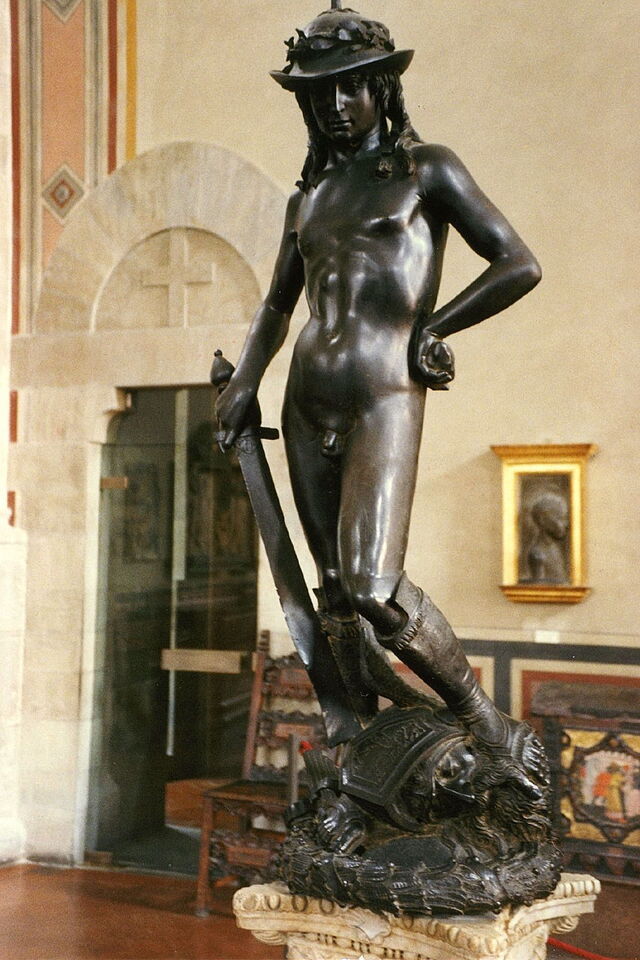
Particular highlights to keep your eye out for as you explore the museum include: Donatello’s famous bronze, “David,” and some other examples of his work; Michelangelo’s, “Bacchus,” “Brutus,” “David-Apollo,” and a relief of a Madonna with Child; a model of Cellini’s, “Perseus,” and some small bronze sculptures that were moved to the palace from the Loggia dell'Orcagna; Giambologna’s, “Mercury”; glazed terracottas by Luca della Robbia; and some bronze animals that came from the grotto of the Medici villa of Castello. For those interested in Renaissance art and Renaissance sculpture, in particular, the Bargello is an excellent museum to visit as it has some rather extraordinary works on display. If you have found a luxury villa in Florence and are planning on exploring this incredible city in Tuscany, be sure to set aside some time to wander the halls of this exceptional building and the treasures that are housed inside of it.
Photo credits
Picture 1: Patrick A. Rodgers / CC BY-SA 2.0
Picture 1: Patrick A. Rodgers / CC BY-SA 2.0