St Antoninus
Posted in: Architectural Gems Churches & Religious Buildings Curiosities Florence History Important People Legends Localities Tourist Attractions
Mummies are probably not the first thing that comes to mind or that you associate with Florence, however, there is one lying on full view in one of her churches.

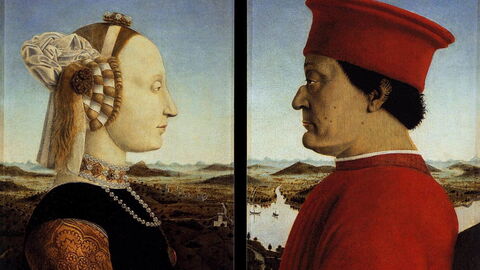
Resting in a glass coffin in the Dominican Church of San Marco in Florence is the 550 year-old mummified relic of St. Antoninus, dressed in his ornate archbishop’s garb. Interestingly, the man was made an archbishop against his wishes in the last 12 years of his life and only conceded when the pope threatened him with excommunication. He accepted the title but continued to live as a monk and only owned some simple furniture and a mule.

Once you have found a luxury villa in Florence and are exploring her churches and architectural gems, make sure to find time to stop by San Marco and learn about this fascinating man and both his life and death.
Mouflons
Posted in: Activities Countryside Hiking Localities Lucca Mountains Parks & Gardens Tourist Attractions
These are some cute and funny-looking creatures, aren't they?

Mouflons are a subspecies group of the wild sheep and are thought to be one of the two ancestors for all modern domestic sheep breeds. With red-brown, short-haired coats with dark back-stripes and light-colored saddle patches, sleek elegant bodies, sweet faces and big horns, they are some of the more distinctive and photogenic creatures that you are likely to encounter in the wild in Tuscany.

One of the best activities for those who have found a vacation rental in Tuscany and are exploring the region, is to spend some time wandering the stunning Apuan Alps and spotting mouflons.
Ballet
Posted in: Activities December Events Florence Localities November Tourist Attractions
There is nothing else quite like a night at the ballet during the winter months. It is an absolutely lovely way to spend a cold evening: dressed elegantly but wrapped up warm, watching a stunning work of art unfold before your eyes, in a gorgeous and, probably, historic building and grabbing a drink and chatting with your party and other patrons during the interval.

Just find a luxury villa in Florence this winter and, between festive shopping trips, ice-skating, visits to Santa and coffee runs, squeeze in a night at the ballet.

It will be a memory that you will be able to treasure forever and is also sure to help get you in the mood for the holiday season!
Lobby
Posted in: Architectural Gems Florence History Important People Localities Renaissance Tourist Attractions
There are many stunning buildings and other architectural gems in Florence and each has its own unique traits and histories that make them all the more interesting. One of the most striking and memorable in its comparatively simplistic theatrics, however, is the Laurentian Library.

Just browse our rentals and find the perfect luxury villa in Florence so that you can explore this amazing and stunning building for yourself.

Located on the first floor of Brunelleschi's cloister, you will find an entrance to the Laurentian Library, a library that is home to the most important and prestigious collection of antique books in all of Italy and one of the greatest scholarly legacies left behind the Medici family that is still in existence.
Courtyard, Vincigliata Castle
Posted in: Architectural Gems Castles & Palaces Cortona History Localities Tourist Attractions
Inspired by the great beauty, the variety, the historic and cultural value, the facilities, and the juicy legends and myths of the castles of Tuscany, we endeavored to put together a list of some of the most interesting examples that the region has to offer. In our final installment in this series, we have two more wonderful castles that we would like to share with you: Girifalco Fortress in Cortona and Vincigliata Castle in Fiesole.

Girifalco Fortress was built by Gabrio Serbelloni, nephew of Pope Pie IV and Francesco Laparelli. The original foundations of the fort were from an Etruscan construction which was later used by the Goths, Lombards, Romans and then re-purposed in the Middle Ages until it was sacked in 1258. It then underwent numerous campaigns of alterations beginning in 1266 and continuing into the 16th century. The current fortress dates back to the second half of the 16th century and was part of a plan for strengthening the defences of the State ordered by Cosimo I de' Medici.