Archive for 'Important People'


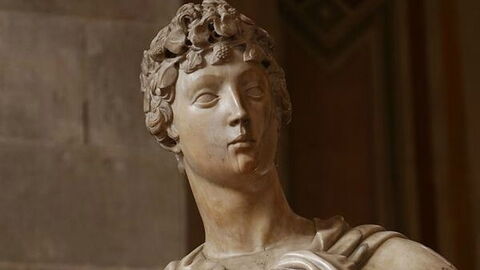
Donatello's David
Donatello, or Donato di Niccolò di Betto Bardi, is one of the most famous artists of the Italian Renaissance and one of the most well-known names in art history. An Early Renaissance sculptor and one of the representative artists of Florence, he was born in the city around 1386 and worked prolifically there his entire life, bar a period in which he worked in Padua for the heirs of the recently deceased and famous condottiero Erasmo da Narni. Due to his long life and career and strong connection to his home town, a large body of his works still exists in the city to this day.

Exploring Florence allows one to accurately and closely explore the breadth and width of this great artist's life and career. While his name stands above many other artists in fame, his specific artworks are less well-known and most people would be hard pressed to name one, unlike the ouevre of some of the other big names of the Renaissance, such as Michelangelo and Da Vinci. Just find a luxury villa in Florence and get familiar with the potentially unfamiliar works of this familiar name.     Read More
  

St Antoninus
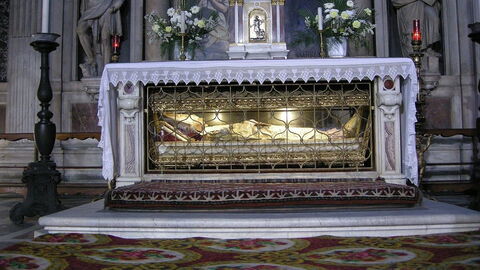
Mummies are probably not the first thing that comes to mind or that you associate with Florence, however, there is one lying on full view in one of her churches.

Resting in a glass coffin in the Dominican Church of San Marco in Florence is the 550 year-old mummified relic of St. Antoninus, dressed in his ornate archbishop’s garb. Interestingly, the man was made an archbishop against his wishes in the last 12 years of his life and only conceded when the pope threatened him with excommunication. He accepted the title but continued to live as a monk and only owned some simple furniture and a mule.

Once you have found a luxury villa in Florence and are exploring her churches and architectural gems, make sure to find time to stop by San Marco and learn about this fascinating man and both his life and death.     Read More


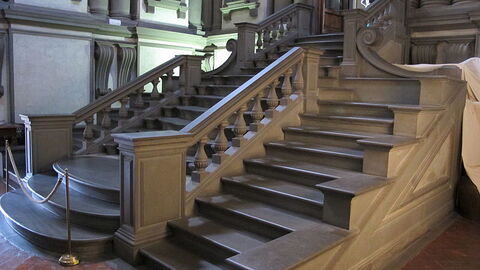
There are many stunning buildings and other architectural gems in Florence and each has its own unique traits and histories that make them all the more interesting. One of the most striking and memorable in its comparatively simplistic theatrics, however, is the Laurentian Library.

Just browse our rentals and find the perfect luxury villa in Florence so that you can explore this amazing and stunning building for yourself.

Located on the first floor of Brunelleschi's cloister, you will find an entrance to the Laurentian Library, a library that is home to the most important and prestigious collection of antique books in all of Italy and one of the greatest scholarly legacies left behind the Medici family that is still in existence.     Read More


View of Malaspina Castle and Massa
Previously in our listing of fantastic castles that are must-sees around Tuscany, we have mentioned Sarteano's giant castle, the foodie favourite Castello di Brolio in Chianti, Prato's iconic Emperor's Castle and the Rocca di Radicofani and its infamous inhabitants. Yet, there are still plenty of other beautiful and fascinating castles worth discussing all across the region.

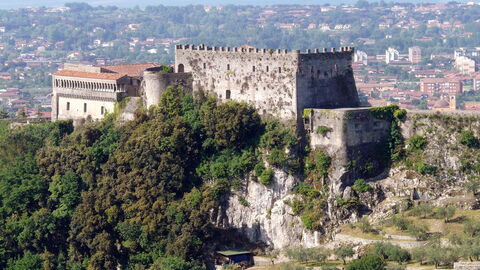
Aghinolfi Castle is a beautiful Tuscan castle perched on a hilltop with stunning views all around the Lunigiana area and out across the Tyrrhenian coast. It was purchased by the nearby town of Montignoso just over a decade ago and was then restored and opened to the public.     Read More


Emperor's Castle at Sunset
In our last article we discussed the proliferation of beautiful castles in Tuscany that are worth tracking down and visiting and, specifically, mentioned Sarteano's giant castle, with its imposing square keep, that dates to the 12th or 13th century and the Castello di Brolio in Chianti and its wine, food, ghosts and impressive grounds. Read on for two more examples of picturesque castles in Tuscany that you won't want to miss.

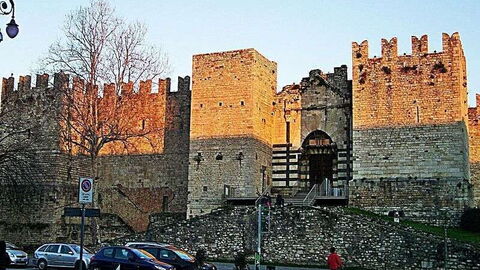
The Emperor's Castle in Prato is considered one of the most important examples of medieval architecture in the city. It is a square, thick-walled, imposing building that worth visiting in its own right but is also now home to local events, festivals and, even, movie screenings. Work on the castle began in 1237 and ended in 1248 by order of the Holy Roman Emperor Frederick II of Swabia and it was designed by Riccardo da Lentini. The most obvious feature of the castle is its striking exterior; square in plan, with one tower to each corner to all angles and one at the centre of every side of the wall curtain.     Read More