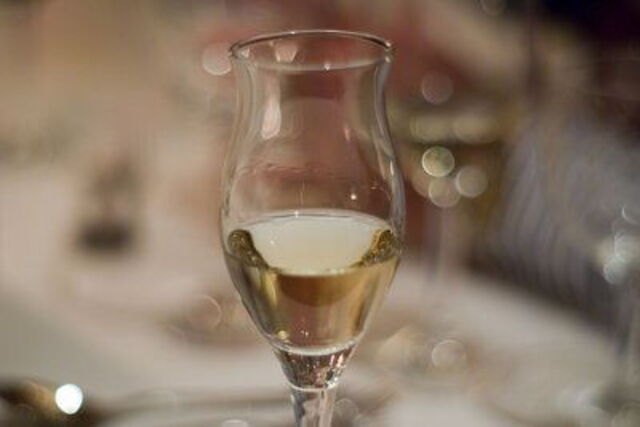
Wine is often the first thing that comes to mind when one thinks of Italy, and it has indeed been a chief export of Italy for thousands of years. Italy and wine are almost inseparable, but what is to be done with what is left over from wine production? Many wine-makers used the remains as compost to fertilize the vineyards the next year, and some pressed them into disks to be used like charcoal to heat the fires for distillation of brandy. All good and productive uses for what appeared to be little more than refuse after squeezing out the lifeblood of the grapes. However, grappa was created one fateful day and the Italians have used it ever since as a 'digestivo', a drink to aid in digestion after meals.
Grappa is made with the leftovers from the wine-making process: grape skins, stems and seeds. This slurry is heated gently and a large percentage of the liquid evaporates from the mixture. The unwanted liquids that remain are separated by the boiling process and removed from the now distilled grappa. Today most grappa is produced in large distilleries, but in the past there were mobile distilleries that would come to a winery, make the grappa and then depart. Some mobile operations still exist, though they are very few and far between. Historically the grappa was not aged before being bottled, and most grappa is still made this way today.
The first documented distillation of grappa was in the fifteenth century where it was made in the Italian Alps, and quickly spread across northern Italy. To those who are already familiar with this drink, it is easy to imagine the relief a shot of grappa would provide on cold Alpine nights. It was created and mainly drank by the poor population at first, trying to squeeze every ounce of usefulness out of the grapes. The drink remained typically a drink of the people for centuries and was not made into the popular drink we know today until the 1970's, when distilleries began striving for quality over quantity. Some distilleries started making monovitigno grappa, or single grape grappa, from a single variety rather than the mash leftover from a seasons worth of different wines. They have also started to age grappa in barrels for a year or two before being bottled, creating a more mellow flavor than fresh grappa. Aged grappa will have a golden tint to it, rather than the crystal clear un-aged variety.
One of the oldest distilleries in the world for Grappa can be found in the town of Bassano del Grappa, the namesake for the drink. The Bortolo Nardini Distilleries have been around since 1779 and also own another distillery in Monastier as well as a modern bottling plant. The Nardini Family still owns the distillery and it run by five of the descendants of Bortolo Nardini himself. You can arrange for a tour of the distillery online as well.
Whether you head out today to your local liquor store or on your next trip to Tuscany, be sure to try a shot of grappa. It may not be for everyone, but it is undeniably Italian. Beyond the normal application of a single shot of chilled grappa after a large dinner, a shot can also be added to espresso to make a Caffè Corretto, or 'coffee corrected' for a little extra something to wake you up in the morning.
The first documented distillation of grappa was in the fifteenth century where it was made in the Italian Alps, and quickly spread across northern Italy. To those who are already familiar with this drink, it is easy to imagine the relief a shot of grappa would provide on cold Alpine nights. It was created and mainly drank by the poor population at first, trying to squeeze every ounce of usefulness out of the grapes. The drink remained typically a drink of the people for centuries and was not made into the popular drink we know today until the 1970's, when distilleries began striving for quality over quantity. Some distilleries started making monovitigno grappa, or single grape grappa, from a single variety rather than the mash leftover from a seasons worth of different wines. They have also started to age grappa in barrels for a year or two before being bottled, creating a more mellow flavor than fresh grappa. Aged grappa will have a golden tint to it, rather than the crystal clear un-aged variety.
One of the oldest distilleries in the world for Grappa can be found in the town of Bassano del Grappa, the namesake for the drink. The Bortolo Nardini Distilleries have been around since 1779 and also own another distillery in Monastier as well as a modern bottling plant. The Nardini Family still owns the distillery and it run by five of the descendants of Bortolo Nardini himself. You can arrange for a tour of the distillery online as well.
Whether you head out today to your local liquor store or on your next trip to Tuscany, be sure to try a shot of grappa. It may not be for everyone, but it is undeniably Italian. Beyond the normal application of a single shot of chilled grappa after a large dinner, a shot can also be added to espresso to make a Caffè Corretto, or 'coffee corrected' for a little extra something to wake you up in the morning.