Archive for 'Tourist Attractions'


Galileo, Sustermans
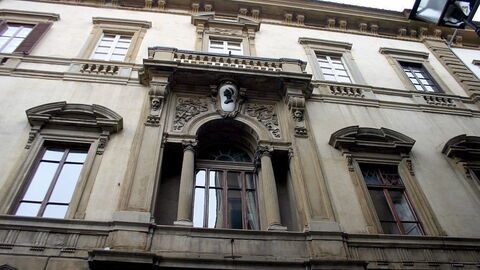
Located in Piazza dei Giudici, not far from the Uffizi, is Palazzo Castellani. The eleventh century building takes its name from its last private owners, the Castellani family and has been home to the Museo Galileo, or Institute and Museum of the History of Science, since 1930.

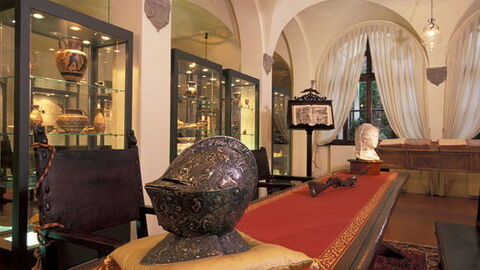
It displays an important collection of scientific instruments from the 13th century onwards and sheds light on the scientific tradition of Florence which is sometimes forgotten in favour of its artistic heritage.

It developed from the interests of the Medici and Lorraine families who added to scientific collections, as well as artistic ones, from the 17th into the 19th centuries.     Read More


Sword in the Stone, Montesiepi Chapel
Galgano Guidotti was born in 1148 to a minor noble. At the age of 32, he had spent most of his life as a self-centred, violent knight. That year he was visited by the Archangel Michael in a vision and told to renounce his ways.

Guidotti then became a hermit and took up residence in a nearby cave. While on his horse one day, he was mystically led to Montesiepi, a hill near his home town, Chiusdino. There he saw a vision of the Apostles, Christ and Mary and was, once again, told to turn his back on his former ways. At this point of the tale, there are a couple versions of what happened next.     Read More


Buontalenti Grotto, facade
The Boboli Gardens in Florence is a park behind the Pitti Palace which was once the seat of the Medici family. Some of the first formal Italian gardens, Boboli is made up of fountains, statuary from ancient Rome to the 18th century, semi-private and public spaces, nympheums, temples, planting and grottoes. The largest of these grottoes is by the artist, Buontalenti. Built between 1583 and 1593 for Francesco I de' Medici, it was conceived to complete gardens plans that had been devised by Vasari. Composed of three rooms organised in succession, the grotto is a masterpiece of Florentine Mannerist style. Bizarre, extravagant and somewhat surreal, it is one of the highlights of the garden and a highly memorable place quite unlike anywhere else in the world.     Read More


San Gimignano
San Gimignano is a walled medieval hill town in the province of Siena in Tuscany. It is most well known for its many medieval tower houses, historic city centre and the white wine, Vernaccia di San Gimignano. Picturesque, historic and quaint, it's probably the last place one would imagine hosts a Medieval Torture Museum. However, the museum is not merely a grisly and macabre tourist attraction but also an educational tool used to inform visitors about contemporary human rights abuses.     Read More


Basilica of San Domenico, Siena
Catherine of Siena was a Dominican tertiary, philosopher and theologian. Born in the 14th century, she began having visions of Christ at the age of five or six. At seven, she had decided to devote her life to God. She resisted marriage as a young woman until she was eventually allowed to join the Dominican Order. She was known for helping the sick and poor and launching reform campaigns among the faithful. Catherine even went so far as to become involved in political matters like swaying the loyalties of cities back towards the papal armies. Her writings spread her word further and gained more followers but she also became known for extreme devotion, eventually dying due to her refusal to eat.     Read More