If you have found a vacation rental in Chianti and are exploring this beautiful part of the world, you might also want to look up and see what is in the skies above the lovely landscapes of Tuscany. And where better to do that than the Osservatorio Polifunzionale del Chianti, or Chianti Multifunctional Observatory? Located in Barberino Val d'Elsa, just over 30 minutes from Florence, it is the best place to view the starry skies of Tuscany, the Milky Way, Jupiter, and more, all while enjoying some small bites and a glass of wine. If you feel like spending a romantic evening stargazing in Tuscany, this is the place to do it!
Inaugurated in 2013 in the presence of Italian astronaut Paolo Nespoli, this multipurpose institute is divided into four different observatories: the Astrophysical, Environmental, Geosismic and Agrometereological. Created by an initiative undertaken by the Municipalities of Barberino Val d'Elsa and Tavarnelle Val di Pesa, which are part of the Municipal Union of Florentine Chianti - Metropolitan City of Florence, and managed by the University of Florence, the observatory also has lots of research and academic partners including the Museum of Natural History of the University of Florence, the National Institute of Geophysics and Volcanology, the Institute of Biometereology IBIMET - CNR and Laboratory for Meteorology and Environmental Modeling LAMMA, the National Institute of Astrophysics, and the Departments of Physics and Astronomy, Agriculture and Earth Sciences of the University of Florence.
6
Sep
2019
2019
Posted in: Activities
Curiosities
Florence
Hiking
Localities
Must See Attractions
Pretty Views
Tourist Attractions
A few years ago, we wrote about a particular hill, located in a charming little town called Fiesole, just outside Florence. A long-time favourite holiday destination of noble families looking to escape the hustle and bustle of the city, including the Medici family, the town of Fiesole has continued to be a destination that attracts the rich and famous and normal folk alike who are looking to pop out of Florence and into the peaceful natural surroundings of this area for a while. The hill in Fiesole with which we were concerned, however, drew an incredibly famous visitor not for leisure but, instead, for experiments. Said visitor being Da Vinci, who, long before the Wright brothers, came to test out a flying machine on the hill of Monte Ceceri. This momentous and fascinating event in history is reason enough to draw Da Vinci fans and history buffs alike but there is actually plenty of reason for anyone to stop by if they have found a holiday rental in Fiesole.
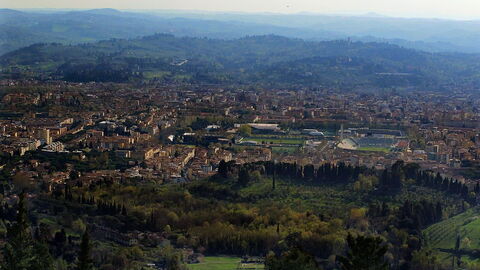
As well as being the site of Da Vinci's would-be airport, Monte Ceceri is popular among hikers and those who like to admire scenery as it offers great panoramic views of the surrounding landscape of Tuscany and right over the city of Florence in the distance. In fact, it’s a perfect spot to spend some time out in nature and stretching your legs if you have found a vacation rental in Florence and are looking for some day trip ideas to explore some parts of Tuscany around the city.
As well as being the site of Da Vinci's would-be airport, Monte Ceceri is popular among hikers and those who like to admire scenery as it offers great panoramic views of the surrounding landscape of Tuscany and right over the city of Florence in the distance. In fact, it’s a perfect spot to spend some time out in nature and stretching your legs if you have found a vacation rental in Florence and are looking for some day trip ideas to explore some parts of Tuscany around the city.
If you are looking for a winery that is synonymous with quality and timeless Chianti Classicos, then you need look no further than Castello di Monsanto. A must-see for wine-lovers that have found a vacation rental in Barberino Val D'Elsa, Castello di Monsanto is an elegant winery full of character that is set within the grounds of a castle and estate that dates back to the middle of the 18th century.
The story of wine at Castello di Monsanto is a little more recent and goes back to 1960 when Aldo Bianchi, a native of San Gimignano, came back to the area in which he was born and raised for a wedding at the castle. He became so enamoured by the view from the terrace of the castle – across the Val d’Elsa and right over to the famous towers of San Gimignano – that he fell madly in love with the place and had purchased it within a few months. Later, when Aldo passed on the castle to his son Fabrizio and his wife Giuliana, the couple planted new vineyards and restructured the surrounding hamlets. The first cru of Chianti Classico was then born in 1962. As of 1996, the estate and the production of wine has been passed down to the third generation of the family, Fabrizio and Giuliana’s daughter, Laura and since 2001, they have all worked in collaboration with the wine maker Andrea Ginovannini in order to continue on with the ever-innovative and experimental spirit of the brand.
The story of wine at Castello di Monsanto is a little more recent and goes back to 1960 when Aldo Bianchi, a native of San Gimignano, came back to the area in which he was born and raised for a wedding at the castle. He became so enamoured by the view from the terrace of the castle – across the Val d’Elsa and right over to the famous towers of San Gimignano – that he fell madly in love with the place and had purchased it within a few months. Later, when Aldo passed on the castle to his son Fabrizio and his wife Giuliana, the couple planted new vineyards and restructured the surrounding hamlets. The first cru of Chianti Classico was then born in 1962. As of 1996, the estate and the production of wine has been passed down to the third generation of the family, Fabrizio and Giuliana’s daughter, Laura and since 2001, they have all worked in collaboration with the wine maker Andrea Ginovannini in order to continue on with the ever-innovative and experimental spirit of the brand.
Posted in: Florence
Localities
Must See Attractions
Parks & Gardens
Pretty Views
Tourist Attractions
If you want to experience the incredible wealth of history and culture and things to see and do in Florence but also want to spend time enjoying the beauty and peacefulness of the Tuscan countryside, then it would make sense to find a vacation rental near Florence. These rentals in the area surrounding the city offer you the chance to both readily visit Florence and to also explore the wider region of Tuscany. In this area around Florence, you will find endless little gems and surprises from specialist stores and makers to wineries, incredible restaurants to stunning historic villas and much more besides. One special gem far off the regular tourist path is Il Giardino Sotto Vico.
Literally meaning “the garden beneath Vico”, this botanic garden is located just outside the town centre of the town of Vico d'Elsa, which is located in the metropolitan area of Florence. Established by a small group of locals who wanted to create a garden for the town, it has grown in size and popularity. The interest and enthusiasm for the initiative has increased and gone from an idea to simply repurpose and reclaim a disused plot of land and become something that has captured local hearts and imaginations. Families, schools, locals, and more now all come together to help grow, add to, preserve, and admire this little beauty. It is a therapeutic space that improves both the physical and psychological health of the individual by immersing them in natural surroundings and the highly social and community-driven atmosphere of the space.
Literally meaning “the garden beneath Vico”, this botanic garden is located just outside the town centre of the town of Vico d'Elsa, which is located in the metropolitan area of Florence. Established by a small group of locals who wanted to create a garden for the town, it has grown in size and popularity. The interest and enthusiasm for the initiative has increased and gone from an idea to simply repurpose and reclaim a disused plot of land and become something that has captured local hearts and imaginations. Families, schools, locals, and more now all come together to help grow, add to, preserve, and admire this little beauty. It is a therapeutic space that improves both the physical and psychological health of the individual by immersing them in natural surroundings and the highly social and community-driven atmosphere of the space.
28
Aug
2019
2019
It makes sense that so many wineries today are located on the grounds of castles and noble estates as these are often home to long-standing vineyards and wine production facilities that are centuries-old. Even if these estates have long since passed from the hands of a noble family, the tradition of wine being made in such places continues on into the modern era. One such estate is that of the Castello della Paneretta, which is located right smack in the globally famous Tuscan wine-producing region that is the Chianti Classico area, on the western slopes of the hills overlooking the Val d'Elsa, facing towards San Gimignano. If you have found a vacation rental in Chianti and you are looking for a traditional winery experience, then this is a really great choice!
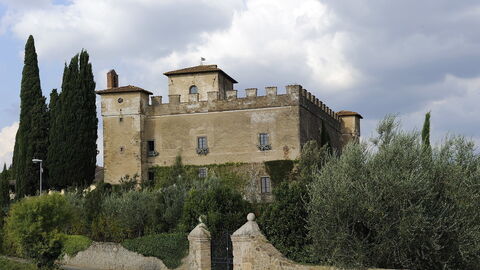
Wine production at Castello della Paneretta is recorded as far back as 1596 when the first harvest is described in farm documents that can be found in the Riccardiana Library. This makes Castello della Paneretta one of the oldest companies in the Chianti Classico area and, certainly, one of the most long-standing producers of wine in Tuscany. The castle itself was built on the site of an ancient watch tower, the Cepparello fortress, which was located a little lower down the slope and was abandoned and destroyed after the Battle of Montaperti in 1260. Built in the 14th century, the Castello della Paneretta is a striking medieval stronghold that is characterised by massive walls, a Guelph battlement, and corner towers, all framing a keep at the centre.
Wine production at Castello della Paneretta is recorded as far back as 1596 when the first harvest is described in farm documents that can be found in the Riccardiana Library. This makes Castello della Paneretta one of the oldest companies in the Chianti Classico area and, certainly, one of the most long-standing producers of wine in Tuscany. The castle itself was built on the site of an ancient watch tower, the Cepparello fortress, which was located a little lower down the slope and was abandoned and destroyed after the Battle of Montaperti in 1260. Built in the 14th century, the Castello della Paneretta is a striking medieval stronghold that is characterised by massive walls, a Guelph battlement, and corner towers, all framing a keep at the centre.