Archive for 'History'


Medici Chapel
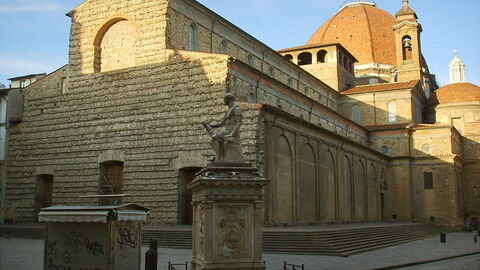
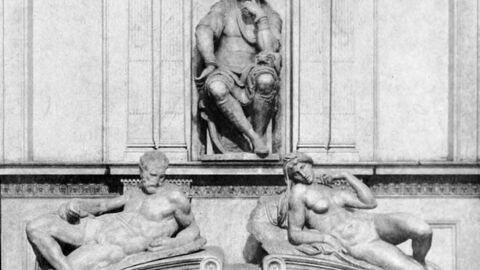
The Medici were bankers, unofficial princes of Florence, then official rulers of the city and one of the greatest dynasties Italy has ever seen. Their stamp remains all over the country but it is most evident and visible in Florence, where they were incredible patrons of the arts. As they were of, ruled and designed the city, many were, of course, laid to rest there as well. One of the most important burial sites for the family are the Cappelle Medicee (or Medici Chapels), two structures at the Basilica of San Lorenzo.

Dating from the 16th and 17th centuries, and built as extensions to Brunelleschi's 15th-century church to celebrate and accommodate the Medici family, the chapels consist of the Sagrestia Nuova, (or New Sacristy) designed by Michelangelo, and the 17th century Cappella dei Principi.

The Sagrestia Nuova was commissioned by Cardinal Giulio de' Medici and Pope Leo X, his cousin, to be a mausoleum for members of the Medici family.     Read More
  

Basilica di San Lorenzo
Michelangelo fans who have found luxury villas in Florence would probably already be headed to the Basilica di San Lorenzo to visit the Medici Chapel, where his monumental tombs designed for Lorenzo il Magnifico and Giuliano dei Medici are housed.

However, there is another reason to stick around and try and befriend any groundsmen you might come across: hidden beneath the chapel is a secret room that has walls covered in drawings by Michelangelo.

The incredible sketches in the room are said to have been created in 1530, while Michelangelo was hiding from the Pope, a Medici. One of those who grew weary of the iron fist that the Medici were ruling the city with, Michelangelo stood up against the powerful family by working to help fortify the city walls against them and, as a result, was forced into hiding for three months!     Read More


Palazzo Medici Riccardi
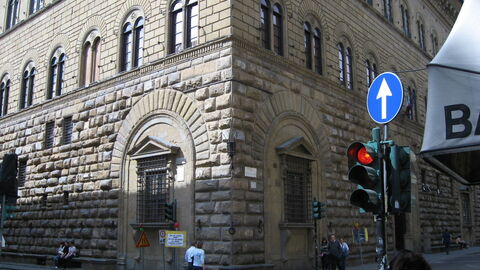
The Palazzo Medici Riccardi, named for the family that built it and the family that expanded it, is a Florentine Renaissance palace that is the seat of the Metropolitan City of Florence and is also opened to the public (in part) as an exhibition space that offers a program of temporary exhibitions.

Originally, these were largely dedicated to the major protagonists of modern and contemporary art but has recently been more focused on creating greater understanding of the historic and artistic context of the palazzo.

Furthermore, there is a stunning frescoed chapel that is an attraction in its own right. As such, the palace is a fascinating sight for many reasons and, in particular, a wonderful peek into one of the most opulent homes that the city has ever seen. Just find a luxury villa in Florence and visit this wonderful architectural and cultural gem for yourself.     Read More


Lake Massaciuccoli
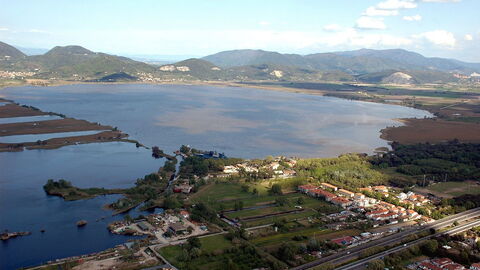
Lake Massaciuccoli is a lake in the Province of Lucca, Tuscany, that is home to a wildlife oasis in a marsh. While the wildlife and vegetation may have shrunk substantially since the 20th century, the lake is still an area of great natural beauty and bounty. There is much to see and do and the surroundings are pretty alright too.

A boardwalk extends over the edge of the lake and all around it, allowing you to readily and comfortably explore the flora and fauna that can be seen blooming and frolicking around the lake.

Not a particularly challenging walk, it offers a chance to get out and about and stretch your legs in a wonderfully scenic setting, without having to take on an incredibly strenuous hike; something that those with younger kids, limited mobility or less will, to appreciate.     Read More


Florence Cathedral
In the final post in this series, here are the last of Google's suggestions for what to do with just a day in Florence. Having just left the Piazza della Signoria, we now move on to the Duomo.

7. Florence Cathedral (Travel: 10 minutes by foot. Approx. time to spend here: 1 hour)

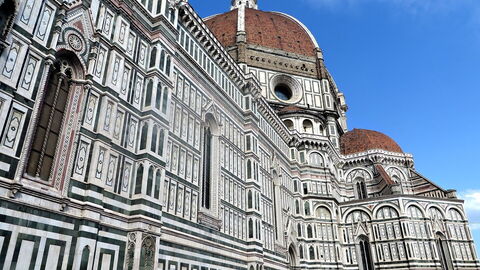
The Basilica di Santa Maria del Fiore, or the Duomo, is Florence's cathedral and main church. It was begun in 1296, according to the designs of Arnolfo di Cambio, and was completed in 1436 with the addition of a soaring dome engineered by Filippo Brunelleschi.

The exterior is expressed in polychromatic marble panels and an elaborate 19th century Gothic Revival façade by Emilio De Fabris. A UNESCO World Heritage Site, it is one of the city's must-see attractions and the view from the top is unrivaled.     Read More