Tuscany has more than her fair share of famous, beloved, and iconic tourist attractions and destinations but which of these are also UNESCO World Heritage sites?
A title that indicates incredible cultural value, the absence of this accolade does not diminish an attraction but being awarded it does underscore the immense significance of a place. Attractions that are named UNESCO World Heritage sites are immediately considered, by many, to be unmissable. So, if you have booked your villa in Tuscany and you are wondering about the UNESCO World Heritage sites near you that you should check out during your trip, then read on to our definitive list to help you plan a dream vacation in Tuscany...
There are eight official UNESCO World Heritage sites in Tuscany:
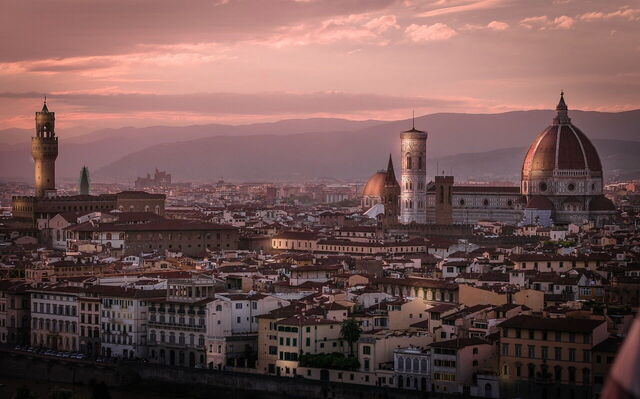
The historic centre of Florence (initiated in 1982)
While there are plenty of specific tourist attractions to seek out and visit while exploring the city, those who book a luxury villa in Florence should also make a point to explore the UNESCO-awarded historic centre as an outing in its own right. Don’t just run from attraction to attraction, museum to museum, but take your time, stroll about, and soak it all in... Florence is truly stunning, an extraordinary feat that combines incredible architectural gems, civic planning, wonderful monuments and works of art in city squares, pretty views, and much more besides. The specific area that has been designated as part of the site by UNESCO includes part of quartiere 1 of the city and is delineated by the 14th century wall circuit. Here you will find gems such as: the Piazza del Duomo with the Cathedral of Santa Maria del Fiore, Giotto's Campanile, the 'Gates of Paradise' by Lorenzo Ghiberti, the Palazzo Medici Riccardi by Michelozzo, the Basilica of Saint Lawrence by Filippo Brunelleschi, with its sacristies by Donatello and Michelangelo; the Museum of San Marco with masterpieces by Fra Angelico, the Accademia Gallery (home to Michelangelo’s David), the Palazzo Vecchio, the Uffizi, the Bargello Museum, the Pitti Palace, the Boboli Gardens, and much more besides.
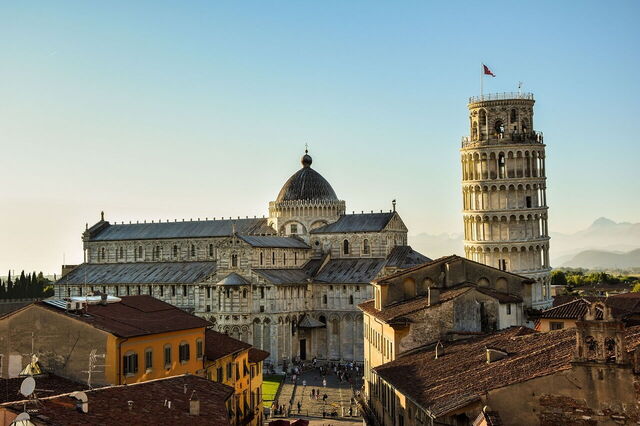
The Cathedral square of Pisa (1987)
One thinks immediately of the Leaning Tower when it comes to Pisa’s attractions but the tower is just part of the religious architectural complex considered a World Heritage site. Also known as the Piazza dei Miracoli (Square of Miracles), this walled area of the city is home to Pisa's Cathedral, the Baptistery, the Campanile, and the Camposanto Monumentale (or Monumental Cemetery) in addition to several other buildings. Those who book a vacation rental in Pisa, therefore, should make time for more than just the tower!
The historical centre of San Gimignano (1990)
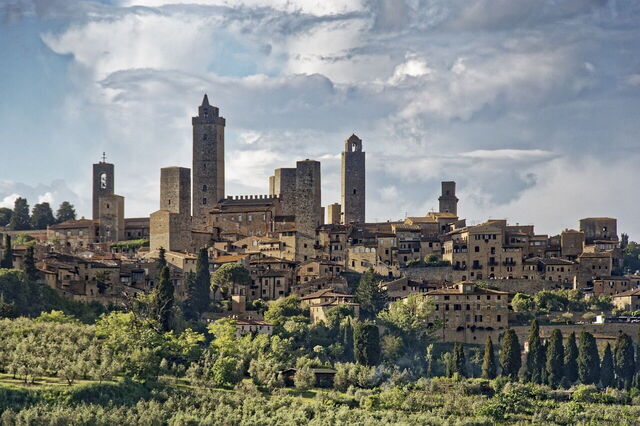
Another stunning and well-preserved historic centre of a town in Tuscany (you will begin to see a theme here), the centre of San Gimignano is home to a gorgeous cathedral, several other important religious and public buildings, and a collection of notable palaces from the 1100s to the 1300s. In particular, the city retains both its original urban layout and many masterpieces of 14th and 15th century Italian art in their original architectural settings including Domenico Ghirlandaio’s 15th century frescoes in the Cathedral. Finally, San Gimignano also retains 14 of its medieval towers, seen poking high above other buildings in the skyline, making a holiday rental in San Gimignano ideal for lovers of Medieval architecture in particular.
The historical centre of Siena (1995)
Reflecting a period from the 12th to the 15th centuries, when the city was building to compete with Florence, the stunning historic centre of Siena is another gem listed by UNESCO. A largely Gothic beauty, the key area here is located in and around the Piazza del Campo and includes the town hall, several palaces, and the cohesive town plan that see individual architectural wonders considered as part of the whole.
The historical centre of Pienza (1996)
Finally, for the historic centres, we have the small but lovely town of Pienza. Known as the, “ideal Renaissance city,” it was largely the creation of the great humanist Enea Silvio Piccolomini, (later Pope Pius II), who sought to elevate and transform what was then his home town of Corsignano. Built along classical ideas of harmony and symmetry, this 15th century wonder maintains its stunning buildings and elegant street plans.
The Val d'Orcia (2004)
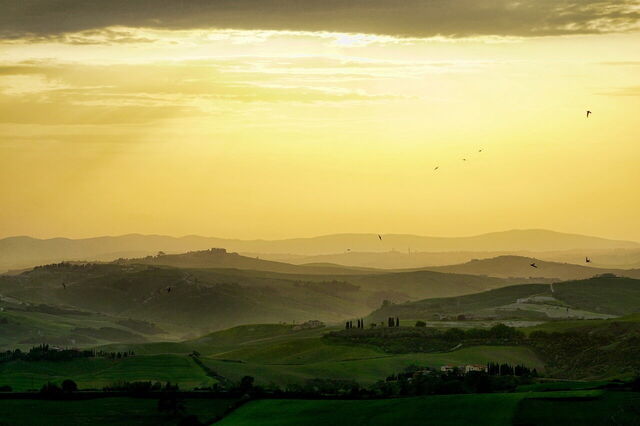
From Pienza, meanwhile, you can take in sweeping views of the surrounding area, a swathe of immense natural beauty called the Val d’Orcia. Those who book a villa in the Val D’Orcia will quickly discover its charms – for this is the Tuscany you see in images that seem too beautiful to be true. This is the Tuscany of rolling green hills, cypress-lined streets bending between farmhouses dotted sporadically, ancient hill-top towns, golden light, and foggy mornings. To properly enjoy this part of Tuscany, you’re going to need a car but then you’ll need little else. Simply hop in and head out to explore and fall in love!
The Medici Villas and Gardens (2013)
The Medici Villas and Gardens were owned by members of the Medici family between the 15th and 17th centuries and are stunning palaces with gorgeous gardens. Do the full tour to really appreciate the power, taste, wealth, and influence of this key Tuscan family!
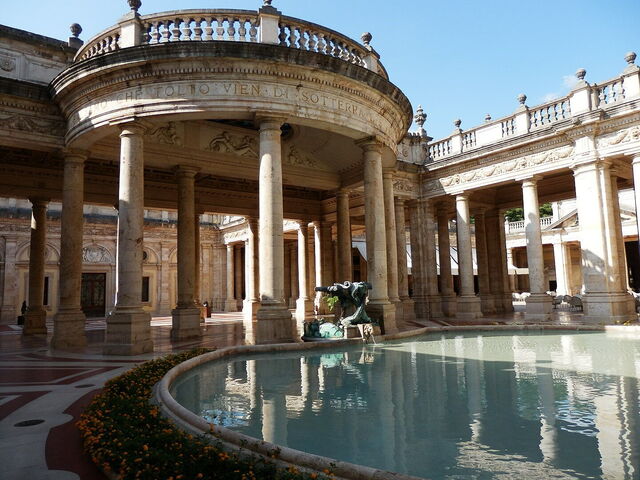
The Great Spa Towns of Europe – Montecatini Terme (2021)
A new addition, the Tuscan part of this list is only one entry, with other listed spa towns being found in Austria, Germany, France, Belgium, the UK, and Czechia. The Tuscan pick is the incomparable spa town of Montecatini Terme, a tourist destination for centuries that boasts architectural wonders, top-notch spas, and amazing naturally-occurring thermal waters with curative and relaxing properties.