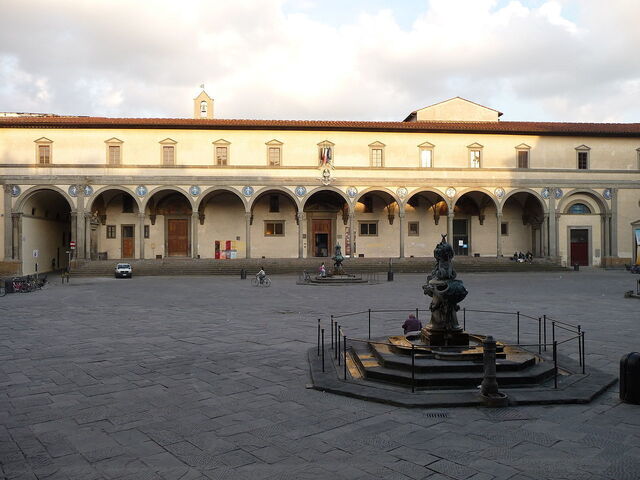
The Ospedale degli Innocenti, in Florence, was established in 1419 as the first lay institution in the world dedicated to infancy and childhood thanks to donations from Francesco Datini, “the merchant of Prato”. It became home to children abandoned by their families for various reasons, generally extreme poverty and those children then received the surname Innocenti. The prevalence of this name today indicates the importance and scale of the institution's work. However, the building that was home to this service, so ahead of its time, is one of the city's major attractions for more than its social and historical importance; it is also an architectural gem designed by the great Renaissance master, Brunelleschi. Now, a new museum is also being opened on the premises this summer that looks to both the past and the future. If you are interested in history, social issues, culture and art, this sight is a must-see as it manages to cater to all of these interests. Just find a luxury villa in Florence and you can visit for yourself.

On June 23, 2016, the Ospedale degli Innocenti in Florence will open a new museum called the Museo degli Innocenti. It will provide a comprehensive look at the institution’s history and use multimedia displays to tell the stories of more than 100 children who lived at the orphanage over its six centuries. Also on display will be an extraordinary collection of artworks including 80 paintings by artists such as Domenico Ghirlandaio, Luca and Andrea della Robbia, Sandro Botticelli and Piero di Cosimo.
If you are more interested in getting active, the museum will also offer art workshops for children and adults, advice for tourists, and conferences, as well as the three floors and almost 1,500 square metres of exhibition space.
If you are more interested in getting active, the museum will also offer art workshops for children and adults, advice for tourists, and conferences, as well as the three floors and almost 1,500 square metres of exhibition space.
A nice detail is that the museum has been designed with children in mind, honouring the spirit of the institution and labels, chairs and activities have been made lower and smaller, privileging the ease and comfort of younger patrons. Furthermore, the tales of the children who lived here are not just painted as weepy sob stories but flesh out images of individuals with their own lives, struggles and triumphs. Nor does it merely dwell on the past but looks to the present and future: talking about the recent and ongoing work of the Istituto degli Innocenti, which has housed UNICEF’s Global Office of Research since 1988; their important library for research on and documentation of childhood; their national centre for documentation and analysis of childhood and adolescence; a small first-response centre for the temporary care of at-risk children; the management of three large day-care programs for a total of 150 children; the management of a home for the integration of migrant families; and a recently established centre for teens. The Ospedale is a truly fascinating place and this museum does an excellent in explaining and illustrating its key role in the history and future of Tuscany.
Photo credits
Picture 1: Warburg / CC BY-SA 3.0
Picture 1: Warburg / CC BY-SA 3.0