Siena has a rich artistic tradition and many fantastic examples of the art produced there during the Middle Ages and Renaissance still remain in the churches, galleries and public buildings. The school of painting in Siena flourished between the thirteenth and fifteenth centuries and, at one stage, even rivalled that of Florence in beauty and importance. Unlike Florentine art, however, it favoured the traditional and decorative over the humanistic and forward-thinking. The art there remained somewhat Gothic in style, even throughout the Renaissance.
Depictions of religious tales prioritised stylised figures, elegance and grace. The city retains its appearance as a well-preserved late Medieval town and is, therefore, a wonderful place to go and see artwork from that period.
The Pinacoteca Nazionale, a national museum housed in the historic centre of Siena, has a particularly wonderful collection of work by local artists.
Why not find a luxury villa in Siena and visit for yourself? Here are just three works that you won't want to miss!
The Pinacoteca Nazionale, a national museum housed in the historic centre of Siena, has a particularly wonderful collection of work by local artists.
Why not find a luxury villa in Siena and visit for yourself? Here are just three works that you won't want to miss!
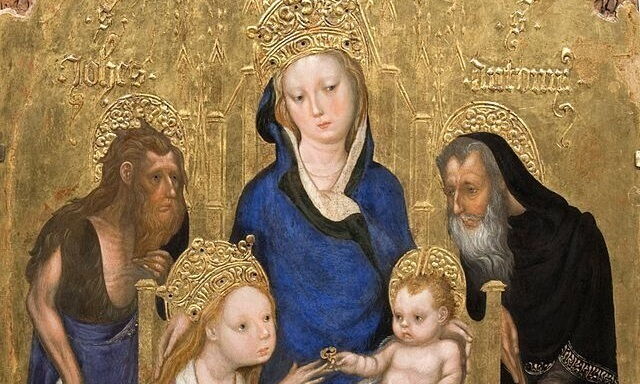
Michelino da Besozzo's “Mystical Marriage of Saint Catherine” dates to c.1420 and is a typical altarpiece in tempera on a wood panel.
It is the only signed work by the artist in existence and is a particularly lovely example with highly stylised, undulating figures and female figures with especially sweetly painted faces.
The work shows the Madonna and child at the centre with Christ holding out a ring to a kneeling Catherine. John the Baptist and Saint Anthony the Great flank the central group.
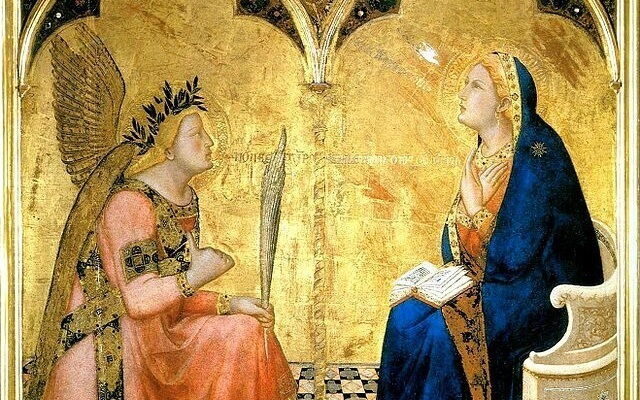
Another wonderful altarpiece is Ambrogio Lorenzetti's “Annunciation”. Though an earlier work, dating to 1344, it is better preserved than da Besozzo's altarpiece and is exceptionally delicately painted. The moment from the story of the Annunciation which has been chosen is unusual, with the angel Gabriel on the left, explaining to the Virgin, on the right, how the immaculate conception is to take place. The Virgin is shown with her arms crossed over her chest and her eyes raised to God as he sends a dove (symbol of the holy spirit) her way. A book on her lap shows her to be an educated and pious woman, the perfect choice to be the mother of God's child. Originally painted for the Office of Tax, it now is one of the highlights of the Pinacoteca's collections.
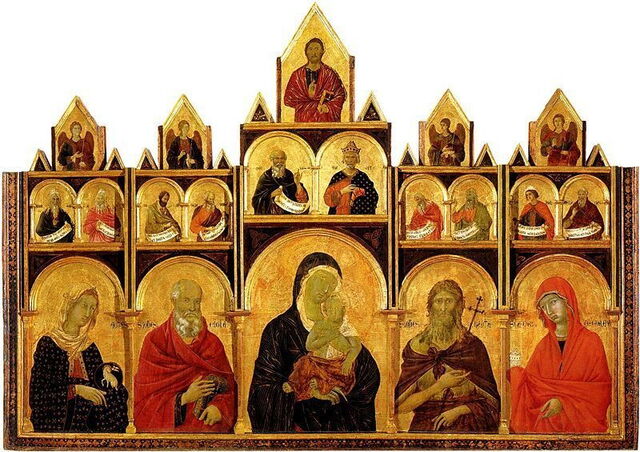
Last but, by no means, least, is Duccio's “Madonna and Child with Saints Polyptych”. One of, if not the, most famous artists in Sienese history, Duccio was the master of Simone Martini and one of the leading painters of the Middle Ages. This work is typical of Duccio in its use of gold and especially bright colours and depicts Madonna and Child at the centre of a five-part polyptych altarpiece, surrounded by angels, saints, prophets and patriarchs.
If you want to see these Sienese works or countless others, pop into the Pinacoteca on your next visit to Siena.
It is the only signed work by the artist in existence and is a particularly lovely example with highly stylised, undulating figures and female figures with especially sweetly painted faces.
The work shows the Madonna and child at the centre with Christ holding out a ring to a kneeling Catherine. John the Baptist and Saint Anthony the Great flank the central group.
Another wonderful altarpiece is Ambrogio Lorenzetti's “Annunciation”. Though an earlier work, dating to 1344, it is better preserved than da Besozzo's altarpiece and is exceptionally delicately painted. The moment from the story of the Annunciation which has been chosen is unusual, with the angel Gabriel on the left, explaining to the Virgin, on the right, how the immaculate conception is to take place. The Virgin is shown with her arms crossed over her chest and her eyes raised to God as he sends a dove (symbol of the holy spirit) her way. A book on her lap shows her to be an educated and pious woman, the perfect choice to be the mother of God's child. Originally painted for the Office of Tax, it now is one of the highlights of the Pinacoteca's collections.
Last but, by no means, least, is Duccio's “Madonna and Child with Saints Polyptych”. One of, if not the, most famous artists in Sienese history, Duccio was the master of Simone Martini and one of the leading painters of the Middle Ages. This work is typical of Duccio in its use of gold and especially bright colours and depicts Madonna and Child at the centre of a five-part polyptych altarpiece, surrounded by angels, saints, prophets and patriarchs.
If you want to see these Sienese works or countless others, pop into the Pinacoteca on your next visit to Siena.