Palazzo Pitti

Palazzo Pitti

Posted in: Florence Localities Museums & Galleries Tourist Attractions
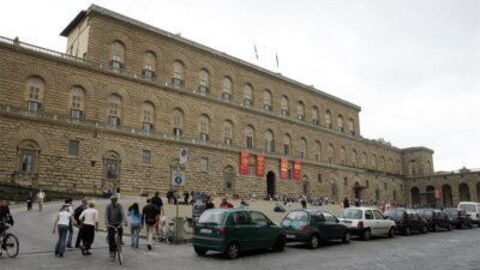
In Florence, it can be difficult to not accidentally bump into some grand piece of history. The city is nothing if not living, breathing history: a museum that people live their day to day lives in. One such piece of history lies right across the Arno from the Palazzo Vecchio and the Uffizi Gallery, the Palazzo Pitti.

The Palazzo Pitti was originally constructed by Luca Pitti who gained his wealth as a banker in Florence.
Duomo di Siena
Posted in: Churches & Religious Buildings Localities Siena Tourist Attractions
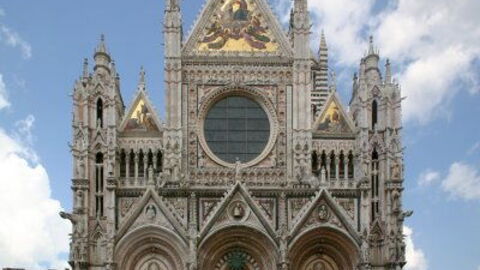
According to legend, Siena was founded by the sons of the fabled founders of Rome, Romulus and Remus. One rode a black horse and the other a white horse, giving the city its symbolic colors that continue today in the symbol of the commune on its coat of arms. The city's colors and legends also live on in one of the most memorable sites the city has to offer: the Duomo di Siena. The Duomo di Siena was built with striped white and black marble, echoing the city's colors all the way up to the bell tower.

The impressive cathedral was built in many different spurts of construction, with additions after the departure of a former architect or artisan, as well as, when the church simply needed an expansion. One massive expansion was planned in the fourteenth century that would have doubled the size of the church as it is today, but unfortunately was not completed as the Black Death had finally visited fair Siena.
Posted in: Florence Localities Museums & Galleries Tourist Attractions
When thinking of Florence, one name repeatedly comes to mind: Medici. The Medici’s were arguably the most powerful family in Tuscany, in Italy from the thirteenth to the seventh centuries.

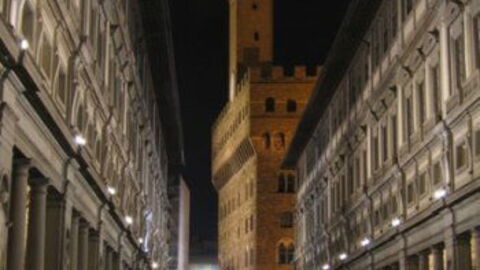
The Medici’s expanded the territory of the Grand Duchy of Tuscany during their rule through military might, political influence, and simple timing as many smaller towns were ravaged by the Plague and suddenly found the advances of Florence more affable in their weakened state. The Medici’s many contributions to the city are still standing as a testament to their rule. One of the most notable of these landmarks is the Palazzo degli Uffizi, sitting serenely off of the Piazza della Signoria across from the Palazzo Vecchio.

Construction on the Uffizi began in 1560 by the Grand Duke of Tuscany, Cosimo I de’Medici. His trusted architect Giorgio Vasari designed and oversaw the construction of the Palazzo degli Uffizi. The original intent of the Palazzo was to house the offices of the city magistrates, but slowly the halls and the rooms of the Uffizi were transformed to house the ever growing collection of art that the Medici’s procured.