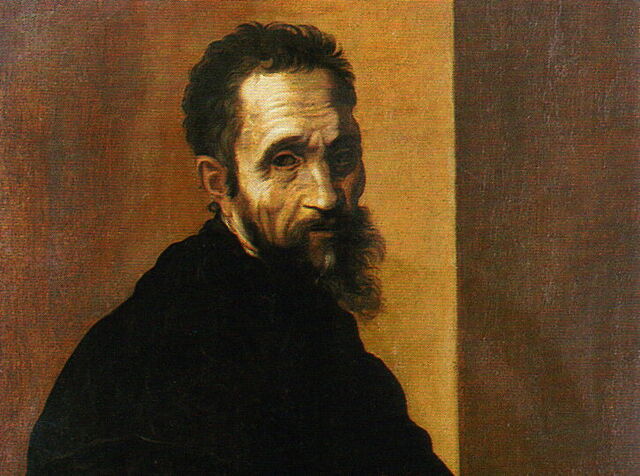
Caprese Michelangelo is a town located 50km away from Arezzo in Tuscany and owes its name to Michelangelo Buonarroti who was born there in 1475 when his father Ludovico was the town’s authoritative figure. It is situated on the Apennine ridge, in the greenest area of the Tuscan Val Tiberina and the surrounding landscape of this part of Tuscany is particularly beautiful, with numerous rivers and watercourses punctuating the fields of vegetables, fruit and flowers on which Caprese Michelangelo's economy is based.
As the birthplace of that great Renaissance Master, it is obviously a site of pilgrimage for the art-lovers of the world but its great beauty means that anyone in your party will enjoying visiting this charming town. Just find a holiday rental in Caprese Michelangelo and discover this little gem for yourself.
As the birthplace of that great Renaissance Master, it is obviously a site of pilgrimage for the art-lovers of the world but its great beauty means that anyone in your party will enjoying visiting this charming town. Just find a holiday rental in Caprese Michelangelo and discover this little gem for yourself.

On the 9th February 1913, by Royal Decree, the name Michelangelo was added to the older name of Caprese, in honour of its most famous citizen. The memory of Buonarroti continues to live on today in the Church of St. John, the Michelangelo Museum, the Palazzo Clusini (where he was born and the seat of the Municipality today), the Stronghold Rooms, in which old plaster moulds from the Florentine galleries can be found, and the striking open-air Sculpture Museum.
However, the town is steeped in history that goes far beyond one man, traces of it are visible in Caprese’s most significant monuments such as the Camaldolite Abbey of Tifi, the Parish of St. Cassian, the romantic church of St. Christopher and the Sanctuary of the Madonna della Selva.
However, the town is steeped in history that goes far beyond one man, traces of it are visible in Caprese’s most significant monuments such as the Camaldolite Abbey of Tifi, the Parish of St. Cassian, the romantic church of St. Christopher and the Sanctuary of the Madonna della Selva.
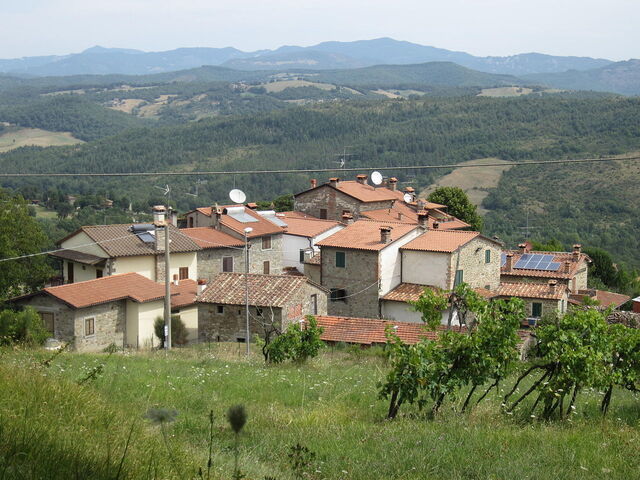
The first settlements in the area of Caprese Michelangelo go back to the Etruscan and Roman times. During the Middle Ages the village developed around a castle complex, under the jurisdiction of the Ranieri Counts of Galbino. In the 14th century, it came under the control of the Medici who revived the area and built palaces that are still admirable today. For a time, the town was also taken over by Bonaparte's armies. However, by 1861, it was annexed to the Reign of Italy by the King Vittorio Emanuele II of Savoia.
Of course, the highlight of the town is the Michelangelo Museum, established in 1964. Opened then as part of the celebrations commemorating the four hundredth anniversary of his death, its origins, actually date back to 1875 when Caprese celebrated the fourth centennial of the artist’s birth. It is located in Palazzo Clusini’s ‘Sale della Rocca’, the house where Michelangelo was born. The museum also has an outdoor section where visitors can see the ruins of the ancient castle built in the early Middle Ages. Outside you will find several reproductions of Michelangelo’s early works.
For the great Michelangelo fans of the world, this is one town in Tuscany that you won't want to miss!
Of course, the highlight of the town is the Michelangelo Museum, established in 1964. Opened then as part of the celebrations commemorating the four hundredth anniversary of his death, its origins, actually date back to 1875 when Caprese celebrated the fourth centennial of the artist’s birth. It is located in Palazzo Clusini’s ‘Sale della Rocca’, the house where Michelangelo was born. The museum also has an outdoor section where visitors can see the ruins of the ancient castle built in the early Middle Ages. Outside you will find several reproductions of Michelangelo’s early works.
For the great Michelangelo fans of the world, this is one town in Tuscany that you won't want to miss!
Photo credit
Picture 3: Luca Aless / CC BY-SA 3.0
Picture 3: Luca Aless / CC BY-SA 3.0