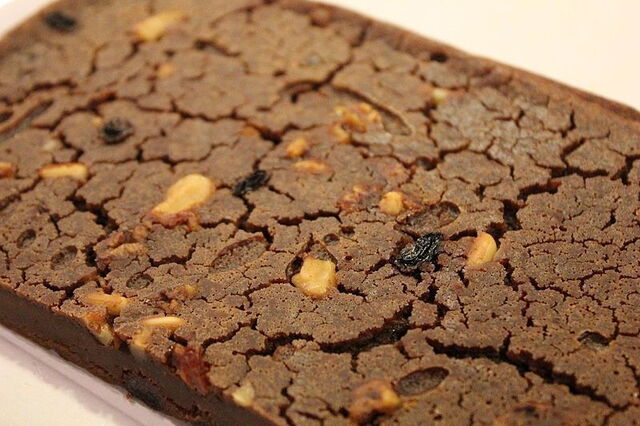
Castagnaccio – which can also be known as baldino, ghirighio and pattona – is a plain cake which is made from chestnut flour and is found in Tuscany, Liguria, Piedmont, Emilia-Romagna and Corsica. However, it is widely considered a Tuscan dish with its origins being disputed and debated but often attributed to the town of Lucca. The Commentario delle più notabili et mostruose cose d'Italia e di altri luoghi by Ortensio Landi from 1553 gives credit to a "Pilade from Lucca" as the inventor ("fu il primo che facesse castagnazzi e di questo ne riportò loda”) and as this is a rather early written record, it is one of the best sources we have to go on.
It is a typically autumnal dessert made with chestnut flour, raisins, pine nuts, walnuts and rosemary. There is no yeast nor baking powder, nor sugar. Like a lot of Tuscan desserts, it also isn't that sweet, sitting somewhere between bread and cake. As a result, it is not as indulgent or as bad for you as most cakes and can be enjoyed without any sense of guilt. Better yet, it's quite easy to make once you source the flour (online or in an Italian delicatessen is probably easiest). Just find a luxury villa in Lucca and taste it there while on holidays. Or, if you can't possibly wait that long, why not try it at home first and get excited for an autumnal getaway in beautiful Tuscany.
It is a typically autumnal dessert made with chestnut flour, raisins, pine nuts, walnuts and rosemary. There is no yeast nor baking powder, nor sugar. Like a lot of Tuscan desserts, it also isn't that sweet, sitting somewhere between bread and cake. As a result, it is not as indulgent or as bad for you as most cakes and can be enjoyed without any sense of guilt. Better yet, it's quite easy to make once you source the flour (online or in an Italian delicatessen is probably easiest). Just find a luxury villa in Lucca and taste it there while on holidays. Or, if you can't possibly wait that long, why not try it at home first and get excited for an autumnal getaway in beautiful Tuscany.
Ingredients
Serves 8
250g of chestnut flour
350ml of water
A pinch of salt
Extra virgin olive oil
40g of sultanas
25g of nuts (pine nuts are traditional but walnuts or almonds will do if you cannot source them)
Fresh rosemary
Method
1. Pre-heat the oven to 180º C.
2. Sieve the flour into a large mixing bowl making sure to get rid of any lumps and add a pinch of salt. Add the water little by little, stirring until the mixture resembles a pourable batter. Stir in 2 tablespoons of olive oil and then set aside for around 30 minutes.
3. Soak the sultanas in warm water for around 20 minutes, to bring out sweetness.
4. Now you can add half of the chopped nuts to the flour-batter mixture, along with the drained sultanas.
5. Grease a baking tin with olive oil. Pour in the batter and sprinkle with the remaining nuts and the fresh rosemary. Drizzle a further tablespoon of olive oil over the cake.
6. Bake for 40 minutes. The cracking of the top of the cake is normal and a sign it is done!
Once you've got a taste for it, enjoy it while wandering the pretty streets of Lucca, kicking leaves and taking in the rolling pastures of Tuscany!
Serves 8
250g of chestnut flour
350ml of water
A pinch of salt
Extra virgin olive oil
40g of sultanas
25g of nuts (pine nuts are traditional but walnuts or almonds will do if you cannot source them)
Fresh rosemary
Method
1. Pre-heat the oven to 180º C.
2. Sieve the flour into a large mixing bowl making sure to get rid of any lumps and add a pinch of salt. Add the water little by little, stirring until the mixture resembles a pourable batter. Stir in 2 tablespoons of olive oil and then set aside for around 30 minutes.
3. Soak the sultanas in warm water for around 20 minutes, to bring out sweetness.
4. Now you can add half of the chopped nuts to the flour-batter mixture, along with the drained sultanas.
5. Grease a baking tin with olive oil. Pour in the batter and sprinkle with the remaining nuts and the fresh rosemary. Drizzle a further tablespoon of olive oil over the cake.
6. Bake for 40 minutes. The cracking of the top of the cake is normal and a sign it is done!
Once you've got a taste for it, enjoy it while wandering the pretty streets of Lucca, kicking leaves and taking in the rolling pastures of Tuscany!
Photo credits: Winedharma / CC BY-SA 2.0