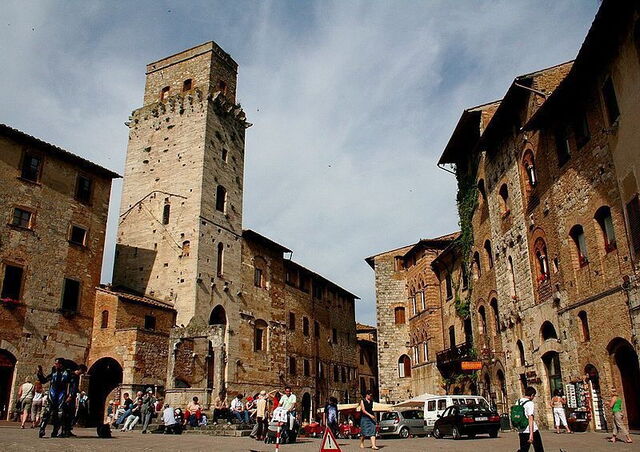
San Gimignano, also known as “Town of the Fine Towers”, is a village right out of a children's storybook, set on a hilltop in Tuscany. Famous for its medieval architecture, it is well-preserved and provides wonderful examples of Romanesque and Gothic secular and religious buildings. Its historic town centre is so highly regarded that it has been declared a UNESCO World Heritage Site. It makes for the perfect setting of an annual festival called the Ferie Delle Messi, or Ferie Messum. This medieval re-enactment of food, games, competitions and culture has been taking place since 1993 and celebrates the cavalier tradition and the Battle of Montaperti in 1260 and Capaldino in 1289.
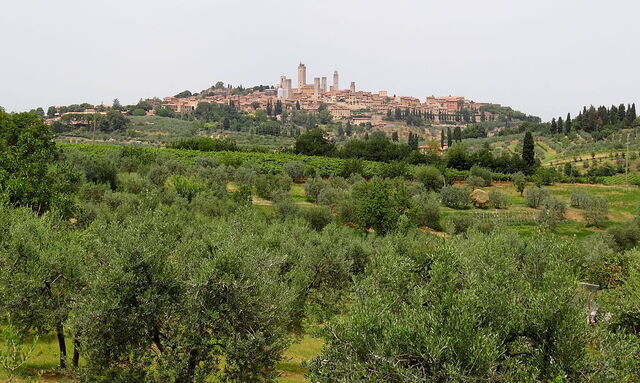
The Ferie Delle Messi also references an earlier tradition of a fertility festival which dates back to 1255. The idea being to celebrate and demonstrate in name of a good harvest each year. Find yourself a Tuscan villa rental and you could be a part of the tradition this year.
The festival takes place on the 3rd weekend of June each year and begins on Friday night, continuing through Saturday and Sunday with a whole host of events. Friday opens the festival and consists mostly of music and dancing with performances by local groups.
The festival takes place on the 3rd weekend of June each year and begins on Friday night, continuing through Saturday and Sunday with a whole host of events. Friday opens the festival and consists mostly of music and dancing with performances by local groups.
Saturday sees more music and spectacle in the morning and in the afternoon there is an introduction to the knights who will be competing in the main event, the Giostra dei Bastioni, on the steps of the Duomo. After this there are games including tug of war and archery, as well as shows and exhibitions. On Sunday is a parade and then the Rite of Purification which sees the blessing of the horses, knights and public. Then the main event finally takes place.
Knights representing each of the four contrade, or districts, compete in the Giostra dei Bastioni. They race each other on horseback, wielding sticks in an attempt to be the first to hit a helmet at the end of the track with their stick. The winner is awarded the Golden Sword, which represents wealth and fertility.
The whole town is decorated for the festival, being bedecked in the banners and flags of the four districts, and hold medieval markets. The streets are awash with excited crowds of families and friends, the smell of authentic traditional foods and the sound of music and laughter.
This is probably one of the many medieval festivals in Italy with the most to offer having so many other events and activities in addition to the giostra. Not to be missed, there is plenty for everyone to do. Or, if you feel like taking it easy, you could sit down at a restaurant, watch the craziness unfold, sample the local wine, Vernaccia di San Gimignano and enjoy this particularly beautiful part of Tuscany.
Knights representing each of the four contrade, or districts, compete in the Giostra dei Bastioni. They race each other on horseback, wielding sticks in an attempt to be the first to hit a helmet at the end of the track with their stick. The winner is awarded the Golden Sword, which represents wealth and fertility.
The whole town is decorated for the festival, being bedecked in the banners and flags of the four districts, and hold medieval markets. The streets are awash with excited crowds of families and friends, the smell of authentic traditional foods and the sound of music and laughter.
This is probably one of the many medieval festivals in Italy with the most to offer having so many other events and activities in addition to the giostra. Not to be missed, there is plenty for everyone to do. Or, if you feel like taking it easy, you could sit down at a restaurant, watch the craziness unfold, sample the local wine, Vernaccia di San Gimignano and enjoy this particularly beautiful part of Tuscany.
Photo credits
picture 1: cfwee / CC BY 2.0;
picture 2: Bjørn Christian Tørrissen / CC BY-SA 3.0
picture 1: cfwee / CC BY 2.0;
picture 2: Bjørn Christian Tørrissen / CC BY-SA 3.0